Our Treatment Programs at Oak Forest Recovery
Choosing the right treatment program is essential for lasting recovery. At Oak Forest Recovery, we offer a continuum of care that adapts to each person’s needs. Our approach blends structure, flexibility, and integrated care to address both addiction and mental health challenges. This overview page introduces the main components of our treatment offerings and how they work together to support clients and families.

Partial Hospitalization Program (PHP)
Our Partial Hospitalization Program (PHP) provides the highest level of outpatient care. Designed for individuals who need intensive support without 24‑hour hospitalization, PHP offers daily programming and clinical oversight.
Clients attend therapy, group sessions, and educational workshops for several hours each day, five days a week. After each day’s programming, they return home or to a sober living residence. This structure allows for deep therapeutic work while maintaining some independence.
PHP is ideal for those stepping down from inpatient treatment or those who require a high level of structure to stabilize symptoms. Services include individual therapy, group therapy, family sessions, medication management, and life skills training. The program is delivered on our clinical campus by licensed clinicians and medical staff. PHP is often the starting point for clients who need intensive care before transitioning to lower levels of treatment.

Intensive Outpatient Program (IOP)
For individuals who need flexible treatment that fits around work, school, or family obligations, our Intensive Outpatient Program (IOP) provides structured care with fewer hours than PHP. Clients attend therapy sessions several times a week, typically nine to fifteen hours per week. IOP is appropriate for people stepping down from PHP or for those whose symptoms are moderate but who still need more support than weekly therapy.
In IOP, clients participate in individual counseling, group therapy, psychoeducation, and life skills workshops. The flexible schedule allows them to continue daily responsibilities. IOP focuses on building coping skills, relapse prevention, and integrating recovery practices into everyday life. Many clients pair IOP with sober living to reinforce accountability and community.

Dual Diagnosis Treatment
Integrated care is vital because treating one condition without the other often leads to relapse or incomplete recovery.
A significant number of individuals seeking help for addiction also experience mental health disorders such as depression, anxiety, or trauma. Our Dual Diagnosis Treatment addresses both mental health and addiction together. This integrated treatment program includes comprehensive assessments, personalized therapy plans, medication management, and education about the relationship between mental health and substance use.
Our therapists and medical team work closely to address co-occurring disorders, ensuring that clients receive consistent and coordinated support. Dual diagnosis treatment is offered at both PHP and IOP levels, allowing clients to receive the intensity of care they need while learning how to manage mental health and addiction simultaneously.
Clinical Treatment Campus
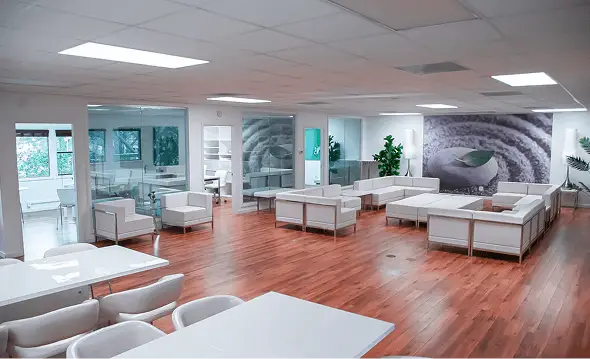
All of our outpatient programs take place at our clinical treatment campus. This facility houses therapy rooms, group spaces, and medical offices. It is designed to be calming and professional, offering a safe space for healing. The campus is staffed by licensed therapists, nurses, psychiatrists, and case managers who deliver evidence-based care. The environment meets healthcare standards and provides privacy and comfort for clients and families.
The campus also includes areas for family meetings and educational sessions. Family involvement is a cornerstone of our approach, and our campus supports this by offering dedicated spaces where loved ones can learn and participate in treatment. By providing care in one location, we simplify scheduling, ensure consistency, and reinforce the sense of community that is so important to recovery.
Continuum of Care and Step-Down Approach
Recovery is not a single event but a series of steps. Our treatment programs are designed to transition clients smoothly from higher to lower levels of care as they progress. Many clients begin in PHP when they need intensive structure, then step down to IOP as they gain stability. Some may start in IOP if their needs allow for greater flexibility. Throughout this process, we adjust treatment plans based on progress and collaborate with clients and families to ensure that care remains appropriate.
For those dealing with co-occurring disorders, dual diagnosis treatment is integrated into each level. Clients who need housing support can pair their outpatient programming with sober living. This combination provides structure, accountability, and community during early recovery.
Why Choose Oak Forest Recovery
Our programs stand out because of our commitment to family involvement, integrated care, and flexibility. We understand that each person’s journey is unique, and we tailor treatment to match individual needs. Our clinical campus provides a professional, therapeutic setting overseen by licensed staff. Our step-down approach helps clients build confidence and skills gradually. And our focus on dual diagnosis ensures that mental health and addiction are treated together.
Our admissions team is available to answer questions, verify insurance, and help determine the right starting point. Recovery is possible, and we are here to support you and your loved ones every step of the way.