
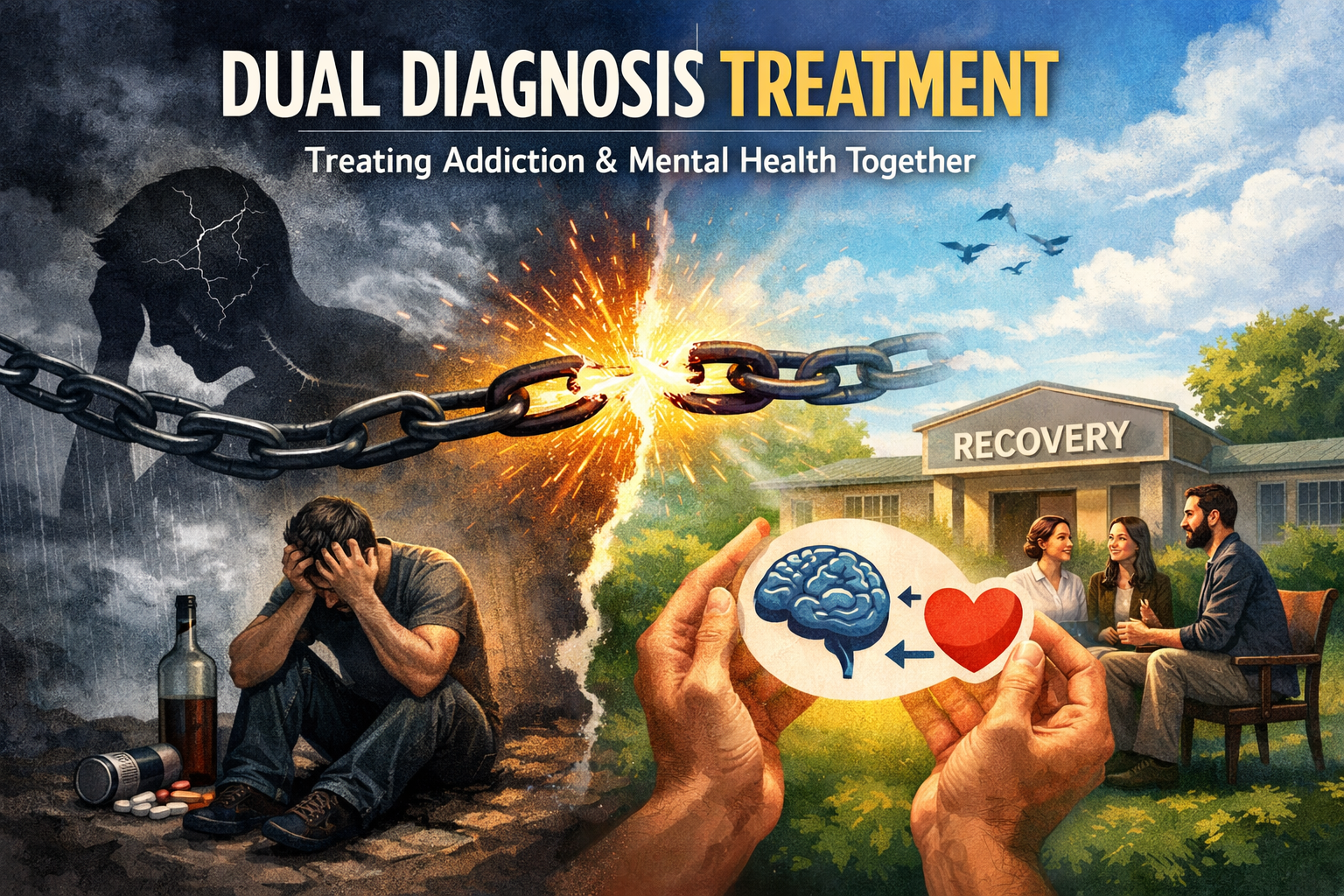
Addiction rarely exists in a vacuum. For many individuals struggling with substance use, drugs or alcohol are not the sole problem—they are a symptom of deeper underlying issues. When a mental health condition like depression, anxiety, or PTSD coexists with a substance use disorder, it creates a complex cycle that can feel impossible to break.
Addressing only the addiction without treating the mental health condition (or vice versa) is like trying to put out a fire while leaving the gas line open. To achieve true, lasting sobriety, both aspects must be treated simultaneously. This comprehensive approach is known as dual diagnosis treatment, and it is rapidly becoming the gold standard in effective addiction recovery.
Understanding Dual Diagnosis: More Than Just Addiction
Dual diagnosis, also referred to as co-occurring disorders, describes a situation where a person suffers from both a mental illness and a substance use disorder. According to national health statistics, this is incredibly common; millions of adults struggle with this simultaneous battle every year.
The relationship between these two conditions is often cyclical. A person suffering from untreated anxiety might turn to alcohol to calm their nerves, only to find that heavy drinking exacerbates their anxiety the next day. Conversely, prolonged drug use can alter brain chemistry, triggering symptoms of depression or psychosis in someone who might not have otherwise experienced them.
Because the symptoms overlap and feed into one another, traditional treatment methods often fall short. A standard drug rehab might achieve sobriety for a few weeks, but if the underlying depression remains untreated, the risk of relapse is dangerously high. Effective dual diagnosis treatment in California focuses on untangling this web, treating the whole person rather than just the visible symptoms.
The Oak Forest Approach: Integrated Treatment for the Whole Person
Recovery is not a linear journey, and it requires more than just willpower. At Oak Forest Recovery, the philosophy centers on a holistic, clinically driven model that understands the complexity of the human mind and spirit.
The Oak Forest approach is built on a 90-day integrated program designed to stabilize the individual physically, mentally, and emotionally. This isn’t about a quick fix; it is about rebuilding a life. During the initial “Compound + Treatment” phase (Day 1 to 90), clients are immersed in a safe environment where they can safely detox and begin the deep work of therapy.
This phase combines rigorous clinical therapy with community integration. By addressing the psychological roots of addiction while simultaneously building social support, the program creates a safety net that catches clients before they fall. It transforms the concept of rehab from a sterile medical necessity into a vibrant, life-changing experience.
The Role of Community and Accountability
Isolation is the enemy of recovery. Addiction thrives in secrecy and loneliness, convincing individuals that they are broken and alone. This is why community and accountability are the cornerstones of the Oak Forest model.
Structured sober living provides an environment where residents are surrounded by peers who are walking the same path. This shared experience creates a unique bond that is difficult to replicate in the outside world. In a luxury sober living California setting, residents aren’t just roommates; they are partners in recovery, holding each other accountable and celebrating small victories.
Peer-support groups play a vital role here. They offer a space to practice vulnerability—a key component of emotional healing. Learning to trust others and being trustworthy in return helps repair the social damage often caused by active addiction. When a person knows they have a community backing them, the terrifying prospect of sobriety becomes a manageable, shared burden.
Bridging the Gap to Real-World Success
One of the biggest challenges in addiction recovery is the transition from a controlled treatment environment back into “real life.” Many relapse prevention programs fail because they drop clients back into their old environments without adequate preparation.
Oak Forest Recovery addresses this with a phased approach. After the initial 90 days, the focus shifts to “Sober Living + Treatment” (Day 90 to 120) and eventually independent sober living. During these phases, the safety wheels aren’t removed entirely; they are adjusted.
Clients are encouraged to engage in job searches, return to school, or volunteer. This reintegration is crucial. It allows individuals to face real-world stressors—traffic, deadlines, difficult bosses—while still having a safe, supportive home base to return to at night. This “scaffolding” approach ensures that coping mechanisms learned in therapy are tested and strengthened in real-time, significantly increasing the chances of long-term recovery.
Family Integration: Healing the Entire Unit
Addiction is often called a “family disease” because its effects ripple outward, damaging relationships with parents, spouses, siblings, and children. Trust is broken, communication breaks down, and resentment builds. Therefore, sustainable recovery must involve the family.
Oak Forest Recovery places a heavy emphasis on family integration. Through initiatives like Family Education Nights and support groups, loved ones are educated on the nature of addiction and dual diagnosis. They learn how to set healthy boundaries, how to support their loved one without enabling them, and how to process their own trauma.
When the family heals alongside the individual, the home environment becomes a sanctuary of support rather than a source of stress. This systemic healing is often the missing piece in the puzzle of long-term sobriety.
Breaking the Cycle for Good
Choosing to enter an addiction recovery program is a brave first step, but choosing a program that understands the intricacies of dual diagnosis is a strategic one. It acknowledges that mental health and addiction are inextricably checking linked and that treating one without the other is a half-measure.
By combining clinical excellence, community support, real-world integration, and family healing, it is possible to break the cycle of relapse. Whether you are looking for a mental health and addiction treatment center for yourself or a loved one, remember that sustainable recovery is not just about stopping drug use—it’s about starting a new life.
If you or someone you love is struggling, don’t wait. The path to a healthier, happier future starts with asking for help.